Loading...
Serving Moreno Valley, CA and surrounding areas. (951) 518-9916
Vinyl framing never needs painting or sealing, and paired with the right heat-blocking glass it stays comfortable even on the hottest Inland Empire afternoons - all year, not just in October.
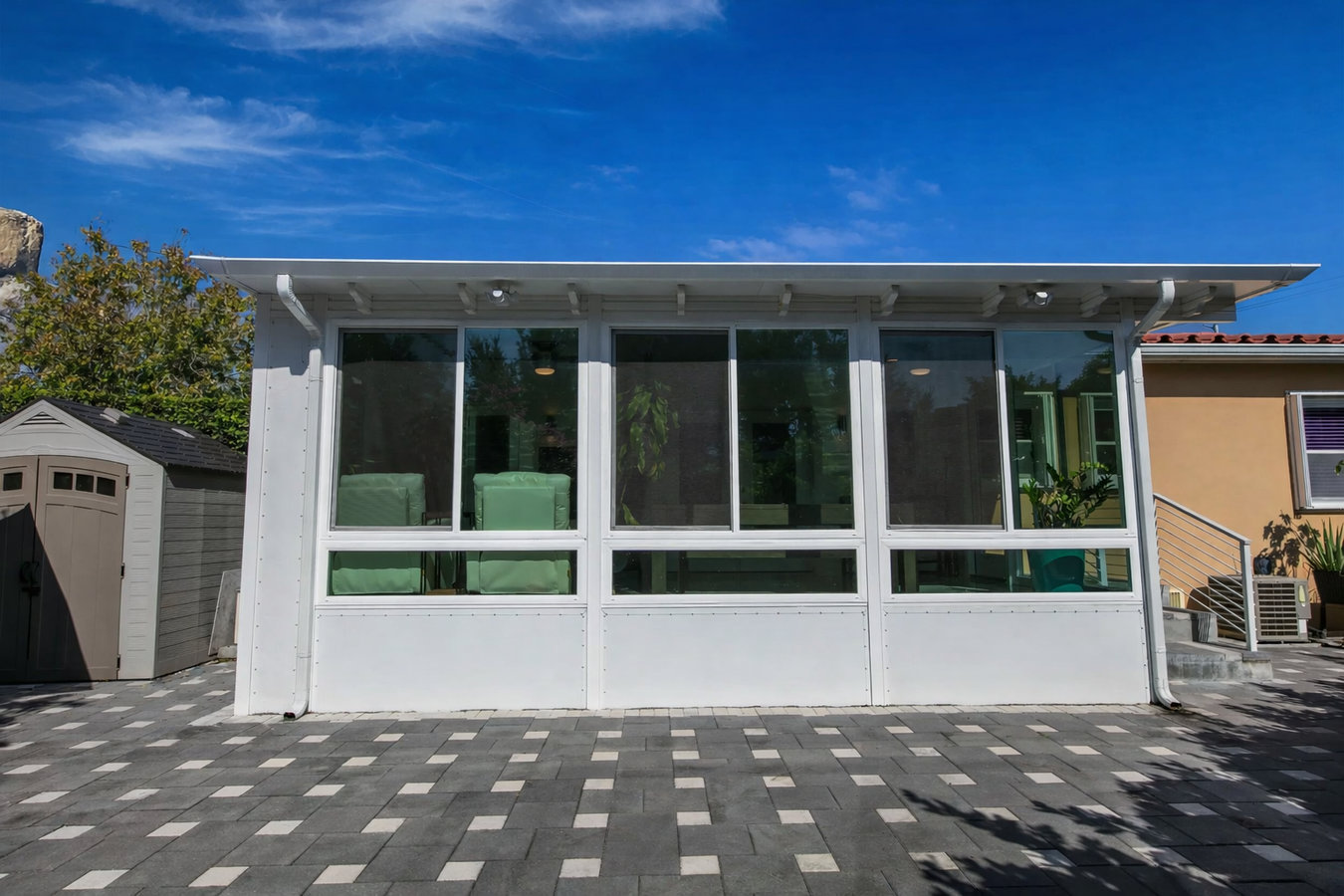
Vinyl sunrooms in Moreno Valley, CA are enclosed additions built with rigid plastic frames that resist rust, rot, and fading - most installations take one to two weeks of active construction once permits are approved, and the finished room requires almost no maintenance compared to wood or painted aluminum frames.
Vinyl is a practical choice for Moreno Valley's climate because it holds up well under intense UV exposure and does not corrode the way aluminum can in areas that see occasional humidity from seasonal rain events. The frame itself, though, is only part of the story - the glass matters more for comfort. A vinyl sunroom with the wrong glass will be unusable from June through September regardless of how well the frame performs. If you are still deciding between room types, our sunroom addition overview covers the full range of options and helps you compare before you commit.
Most homeowners who choose vinyl are looking for the combination of low ongoing maintenance and a clean, finished look that reads as a real room - not a greenhouse or a screened porch. When it is built correctly for this climate, that is exactly what you get.
If your back patio sits empty from May through October because it is simply too hot, you are losing the outdoor-adjacent living space you paid for. A vinyl sunroom with proper heat-blocking glass turns that dead zone into a room you can actually use year-round - even on Moreno Valley's hottest afternoons. If you retreat inside every time you try to enjoy the patio, that is a clear signal an enclosed, climate-controlled space would serve you better.
If the patio cover attached to your home is showing rust, sagging, or cracked panels - or is already pulling away from the wall - replacing it with a proper enclosed vinyl sunroom is often a smarter long-term investment than patching what is there. A gap between the cover and your house wall is a water intrusion risk, and in Moreno Valley's occasional heavy rain events, that gap can let water into your wall framing.
The Inland Empire has some of the highest particulate matter levels in California, and Moreno Valley sees wind-driven dust as a real seasonal issue. If family members with allergies struggle near the back of the house, or you are constantly cleaning dust off furniture near your patio door, an enclosed vinyl sunroom creates a sealed buffer zone between the outdoors and your living areas.
If your family has outgrown the main living areas but a full room addition feels like too much disruption and expense, a vinyl sunroom is worth considering. It adds real, livable square footage at a lower cost per square foot than a fully conditioned addition, and the construction timeline is typically shorter. Many Moreno Valley homeowners use the space as a home office, a playroom, or a casual second living room.
We handle the complete project from permit application through final city inspection. That includes concrete foundation work - slab or footings depending on your site conditions and soil assessment - vinyl frame installation, insulated glass panel fitting, roof system installation, and weatherproofing the connection between the new room and your existing home. We manage all permit paperwork with the City of Moreno Valley Building and Safety Division and prepare HOA submittals for neighborhoods that require architectural review before any work begins. Every project includes a final walkthrough and copies of all permit and inspection records for your files. If you want guidance on the design and glass selection before committing to a specific room type, our sunroom additions service walks through the full range of options.
For homeowners who want a less enclosed option - open-air or screened rather than fully weatherproofed - our three season sunroom service covers that path. A three-season room uses lighter construction and is a lower-cost option that works well during Moreno Valley's fall, winter, and spring, but it is not designed to handle triple-digit summer temperatures the way a fully insulated vinyl room is.
For homeowners who want an enclosed, low-maintenance addition with insulated glass - the most common choice for Moreno Valley's single-story ranch homes.
Suits homeowners with a usable existing concrete patio slab - building on an existing foundation reduces cost and simplifies the permit process.
For homeowners adding ceiling fans, recessed lighting, or heating and cooling connections - significantly cheaper to wire during installation than to retrofit after.
Right for homeowners who want maximum thermal performance - triple-pane or specialty low-e glass keeps the room comfortable on the hottest Inland Empire afternoons.
Moreno Valley regularly sees summer temperatures above 100 degrees, and the Inland Empire heat is more intense than coastal Southern California because there is no marine layer to moderate it. This means the glass in your vinyl sunroom has to work harder than it would in San Diego or Los Angeles. The ENERGY STAR program certifies windows and glass panels that meet independently tested efficiency standards - a useful benchmark when comparing glass packages from different contractors. Without heat-reflective low-e glass, a vinyl sunroom in this climate will be unusable for five or six months of the year, which defeats the purpose of building it. Homeowners in Hemet face the same heat demands, and the glass selection guidance we provide carries across this region.
The second major local factor is expansive soil. Parts of Moreno Valley sit on clay-heavy ground that expands when wet and shrinks when dry - a cycle that stresses foundations year-round. A foundation not designed with this movement in mind can crack or cause the sunroom frame to pull away from the house within a few years. We assess soil conditions at each site before finalizing the foundation design. Homeowners in Beaumont and nearby Inland Empire communities face similar soil conditions, and the same foundation design principles apply across this region.
The first call is a short conversation about your home, your yard, and what you want to use the room for. We schedule a site visit within one business day of your initial contact. At the visit, we measure the space, assess the existing slab or yard area, and walk through size and glass options.
After the site visit, you receive a written, itemized estimate covering the full scope - room dimensions, glass package, foundation approach, permit fees, and any HOA submittal costs. Review every line and ask about anything that is unclear before signing. Vague estimates lead to surprise charges.
Once you sign a contract, we submit the permit application to the City of Moreno Valley Building and Safety Division. If your neighborhood has an HOA, we also prepare the architectural review submission. This stage typically takes two to four weeks. We keep you updated throughout so you know where things stand.
When permits are approved, foundation work begins - typically the noisiest part of the project. Framing and glass installation follow quickly, usually in two to four days. The city inspector visits to sign off on the completed structure. After that, we do a final walkthrough and hand over all permit and inspection records.
No obligation. We visit your home, review your soil and slab conditions, and give you a written estimate - permit process explained upfront.
(951) 518-9916We specify insulated glass with heat-reflective coatings on every vinyl sunroom we build in Moreno Valley. This is not a premium upgrade we upsell - it is the baseline for a room that functions in this climate. A contractor who installs standard glass and lets you figure out the comfort problem later is setting you up for a room you will not use in summer.
We pull permits for every vinyl sunroom project through the City of Moreno Valley Building and Safety Division. That documentation stays with your home and protects you when you sell, refinance, or file an insurance claim. A contractor who skips permits saves you a few weeks of wait time and costs you far more down the road - we never take that shortcut. The California Contractors State License Board allows you to verify any contractor's current license before you sign anything.
Before we finalize any foundation design, we review the soil conditions at your specific address. Moreno Valley has clay-heavy expansive soil in many neighborhoods, and a foundation that ignores this will crack within a few years. This assessment is part of our standard process - not an add-on you have to ask for - because skipping it creates the kind of problem that shows up after the warranty has expired.
Moreno Valley has a large number of planned communities with active HOAs, and many homeowners underestimate how much the approval process slows down a project when it is not handled correctly. We identify your HOA's requirements at the start of the project, prepare the architectural drawings and documents your association needs, and follow up on the submission so you are not waiting on a form you did not know to send.
Every vinyl sunroom we build in Moreno Valley reflects what we have learned working in this specific climate and with this specific permitting process since 2016. Local experience is not a marketing phrase - it is what keeps your project on schedule and off the problem list.
Add a fully enclosed, permitted room to your home - available in a range of framing materials and glass packages designed for Inland Empire conditions.
Learn MoreA cost-effective enclosed room that works well during Moreno Valley's fall, winter, and spring - lighter construction and a lower price point than a fully conditioned room.
Learn MoreQuality contractors in the Inland Empire book out weeks in advance - reach out now to lock in your project start date before the season fills up.