Loading...
Serving Moreno Valley, CA and surrounding areas. (951) 518-9916
Moreno Valley Sunrooms & Patios serves Perris homeowners with patio enclosures, sunroom additions, and patio covers engineered for the Perris Valley's clay soils and triple-digit summer heat. Serving this area since 2016 with fully permitted projects and replies within one business day.
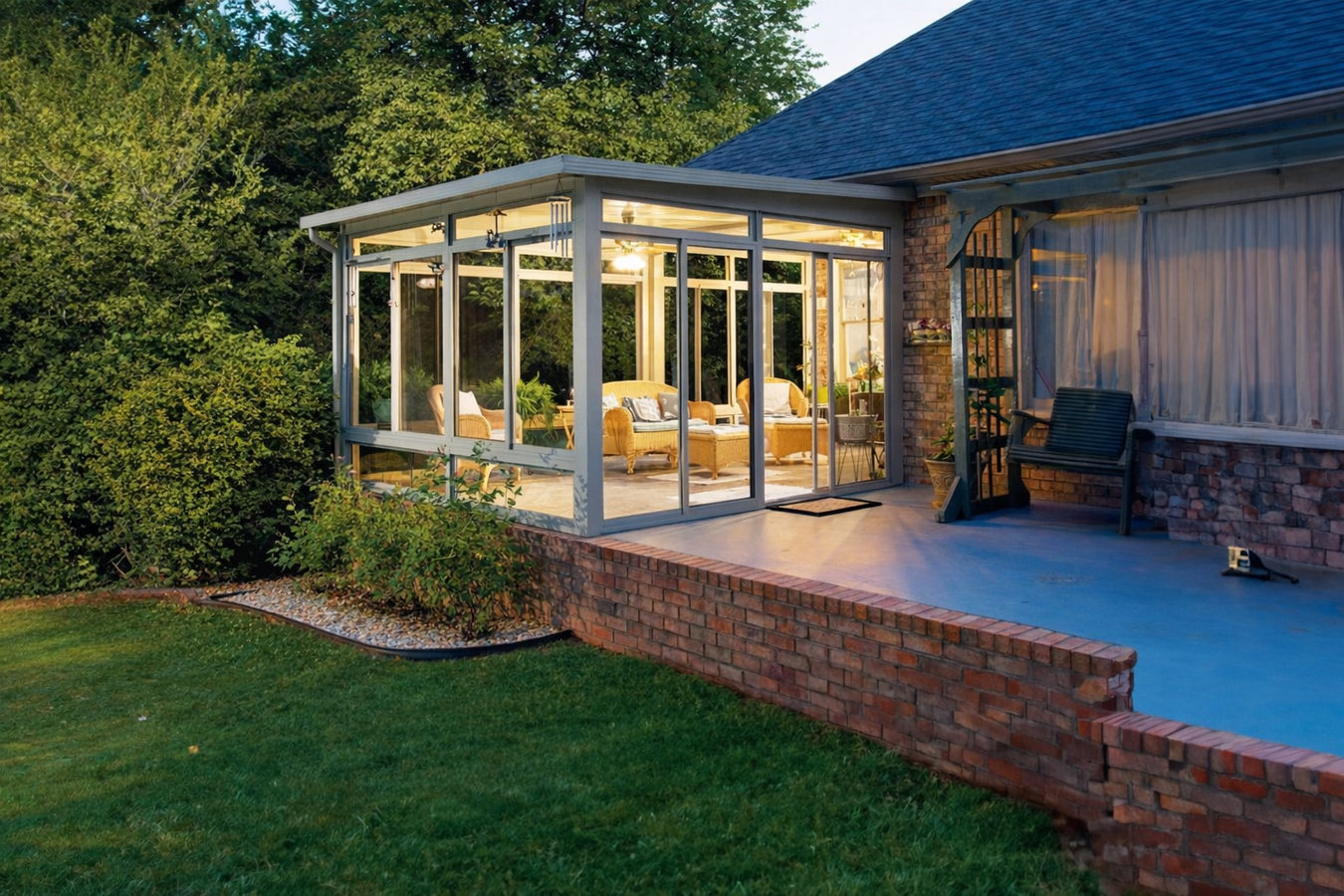
Most Perris homes were built with open concrete slab patios that sit unused from May through September because the heat is simply too intense. A properly designed patio enclosure with heat-reducing glass turns that slab into a livable, shaded room you can actually use through the hot months.
The newer tract neighborhoods on the north and west sides of Perris were built on slab foundations sitting on expansive clay soil - and any sunroom addition here needs a footing or slab design that accounts for seasonal ground movement. Skipping that engineering step is one of the most common mistakes we see on additions that fail early.
Perris gets well over 280 sunny days a year, and a solid-roof patio cover is often the first step toward making a backyard slab genuinely comfortable. A properly attached cover also protects your stucco wall from long-term sun and water damage at the connection point.
Perris spring and fall evenings are often very comfortable, but the open desert landscape means insects can make outdoor sitting unpleasant without some kind of barrier. A screen room gives you ventilation and a connection to the outside without the bugs, at a lower cost than a fully enclosed structure.
Perris winters are mild but real - temperatures can drop below freezing on cold December and January nights, which is more than many homeowners expect. A fully insulated four season sunroom is designed for that range, staying comfortable from the coldest winter night through the hottest July afternoon.
Older homes in Perris's downtown core and along D Street often have original patio enclosures from the 1980s and 1990s that no longer seal properly or manage the summer heat the way they should. Remodeling an existing enclosure - replacing glass panels, resealing the frame, or upgrading to a solid roof - is usually more cost-effective than demolishing and rebuilding from scratch.
Perris sits in the Perris Valley about 75 miles east of Los Angeles, well removed from any coastal cooling influence. Summer temperatures regularly climb above 100 degrees Fahrenheit, and the city sees very little rain from May through October. That heat and UV exposure degrades roofing connections, glass seals, and exterior caulk much faster than in milder climates. A sunroom designed for a coastal Southern California home will show problems - leaking seals, faded framing, heat-saturated glass - within a few years if the materials and design are not chosen for inland conditions.
Underneath Perris's newer subdivisions and older neighborhoods alike, the soil is primarily expansive clay. The California Geological Survey identifies the Perris Valley as a significant expansive soil zone. That clay swells when winter rain soaks in and shrinks when the summer sun dries it out - and that movement puts stress on any concrete slab, footing, or attached structure year after year. Homeowners often see this as cracks in their driveway or patio slab, gaps between their slab and the house, or doors and windows that stick after a wet winter. Any addition or enclosure built here needs to account for that ground movement from the start, not as an afterthought.
Our crew works throughout Perris regularly, and we understand the local conditions that affect sunroom and patio enclosure work here. The City of Perris Building and Safety Department is where we pull permits for projects in this city, and we are familiar with the plan check process and what reviewers typically flag on structural additions.
Perris is a city of contrasts when it comes to housing stock. The older neighborhoods near downtown and along D Street have homes that date back to the early and mid-1900s - wood-frame construction, older systems, and foundations that have been in the ground for decades. A few miles away, the newer subdivisions that have gone up along Ramona Expressway and on the north side of the city are much more recent stucco tract homes, often with larger lots and HOA rules to navigate. Both types require different approaches, and we have worked on both.
Whether you live near Lake Perris State Recreation Area on the east side of the city or in one of the newer neighborhoods closer to the 215 freeway, we cover all of Perris. We also serve homeowners in Moreno Valley, which borders Perris to the north and has very similar soil conditions and climate demands. Our crews regularly travel between both cities on the same project weeks.
We respond within one business day. The first conversation covers what you want to build, where on your property it would go, and roughly what your timeline looks like. There is no pressure and no commitment at this stage.
We visit your Perris home to measure the space, check your existing slab or foundation, and assess how the new structure will connect to your house. You receive a written estimate that spells out exactly what is included - no surprises added later. This is also when we review whether your HOA requires approval before the permit application.
We prepare all drawings and submit to the City of Perris. Plan check typically takes two to four weeks. We handle the back-and-forth with the building department so you do not have to track it yourself.
Once permits are in hand, active construction on a standard patio enclosure runs three to six weeks. City inspectors check key stages, and we coordinate all required inspections. When the final inspection passes, you receive the permit card as documentation for your records.
We serve Perris homeowners with free, no-obligation estimates. Tell us what you have in mind and we will schedule a site visit at your convenience.
(951) 518-9916Perris is a city of more than 80,000 residents in Riverside County, roughly 75 miles east of Los Angeles in the Perris Valley. The city grew rapidly from the 1990s onward, and that growth produced a wide mix of housing ages and styles - from the early-1900s wood-frame homes near the original downtown and along D Street to the stucco tract homes and larger-lot subdivisions that now cover the north and west sides of the city. The area is well known for Skydive Perris, one of the largest skydiving facilities in the United States, and for Lake Perris State Recreation Area - a regional park and reservoir east of the city that draws residents and visitors from across the Inland Empire for boating, fishing, and camping.
Economically, Perris has seen significant investment from large distribution and logistics operations that have brought steady employment to the area. Most of the residential neighborhoods are owner-occupied single-family homes, and homeowners here tend to invest in their properties over time. The climate - hot summers, mild but occasionally frosty winters, and expansive clay soils underneath almost every yard - means outdoor living improvements like patio enclosures and sunrooms require planning specific to this valley. Homeowners in Perris looking at outdoor living projects will also find our crew serves the neighboring areas of Hemet and Beaumont, both of which share similar Inland Empire climate conditions.
Projects booked now start before the next heat season. Call today and we will get a site visit on the schedule within a few days.