Loading...
Serving Moreno Valley, CA and surrounding areas. (951) 518-9916
Most sunroom problems start at the design stage. Get a plan that accounts for Inland Empire heat, local permit timelines, and HOA requirements before a single nail is driven.
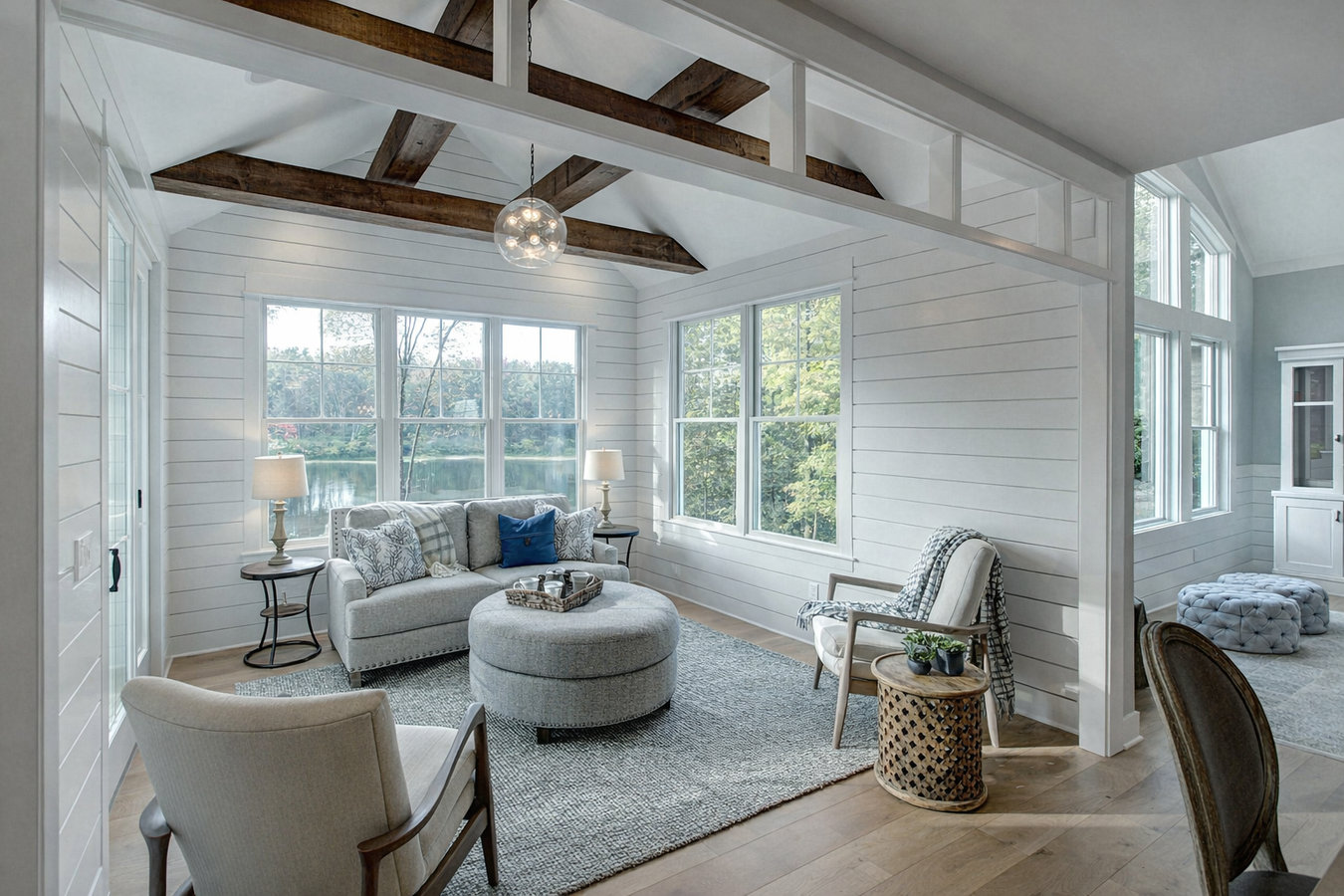
Sunroom design in Moreno Valley, CA means working through every decision before construction starts - glass type, room orientation, foundation approach, and permit requirements - most consultations take one to two site visits, and the plan you leave with is permit-ready and HOA-ready.
Most sunroom problems that show up after construction start with a decision that was made too quickly during design. The direction your room faces determines how much afternoon sun it absorbs. The glass type determines whether the room is comfortable in July or unusable. The foundation design determines whether the room stays level on Moreno Valley's clay-heavy soils. Getting these decisions right on paper is far cheaper than correcting them in the field. If you already have a design in mind and are ready to move forward, our vinyl sunroom installation service is a common next step for homeowners who want a low-maintenance, climate-appropriate material.
Many Moreno Valley homeowners come to us having already spent time looking at photos online, only to discover that the style they loved was designed for a coastal climate. We help you find a design that looks the way you want and performs the way this climate demands.
If your outdoor space becomes unbearable before 10 a.m. from May through October, you are losing the outdoor-adjacent living space you paid for. A sunroom designed with the right glass and orientation keeps that connection to your backyard without surrendering to the heat. This is the most common reason Moreno Valley homeowners start a design conversation.
If you have a concrete patio slab that rarely gets used because it is too exposed or too hot, that slab is often the perfect starting point for a sunroom addition. Building on an existing slab can reduce foundation costs significantly - but only if the slab is in good enough condition. A design consultation includes an honest assessment of whether your slab is usable or needs work.
A sunroom adds a bright, airy room that feels different from the rest of the house - more relaxed, more connected to the outdoors. If your main living areas feel cramped and you are always wishing for more light, a well-designed sunroom solves both problems at once. Many Moreno Valley families describe their sunroom as the room everyone gravitates toward after it is built.
In Moreno Valley's housing market, a properly permitted sunroom adds livable square footage that appraisers count toward your home's value. If you are planning to sell and want to make a meaningful improvement that pays off, a sunroom is worth a serious design conversation now. An unpermitted addition does the opposite - it can create disclosure obligations that complicate your sale.
We handle every decision that shapes how your sunroom performs and how smoothly the project runs. That starts with an on-site assessment of your property - measuring the available space, checking your setback requirements from the City of Moreno Valley's planning records, and flagging any HOA restrictions before you commit to a design. We then work through glass selection, roof style, and foundation approach together, with specific attention to the Inland Empire's climate. The finished design package is permit-ready and includes the drawings your HOA needs if your neighborhood requires architectural review. From there, our custom sunroom service takes the plan into construction, or we can help you move forward with a standard vinyl or four-season room if that fits your goals better.
For homeowners who already have a rough idea of what they want, we offer a design review - going through your current thinking and pointing out what will and will not work given your lot, your climate, and your local permit requirements. This saves time and prevents the frustrating experience of falling in love with a design that cannot be approved. Our vinyl sunroom option is a frequent outcome for homeowners who want a clean, low-maintenance material that works well in Moreno Valley's UV-intense climate.
For homeowners starting with a blank slate - site assessment, orientation analysis, glass selection, and a permit-ready plan before any contractor is hired.
For homeowners who have a rough concept and want an expert to identify what works, what needs adjustment, and what the permit process will require.
For homeowners in planned communities who need professional drawings and documentation prepared to get their association's written approval.
For homeowners who want clear, plain-language guidance on glass types, framing materials, and roof systems that perform in Inland Empire heat - not generic national recommendations.
Moreno Valley's summer heat regularly exceeds 100 degrees, and a sunroom designed for a coastal California climate will underperform badly here. The most critical design decision is glass selection - low-emissivity coatings that reflect heat are not optional in this climate, they are the difference between a room you use year-round and a room you avoid from June through September. The ENERGY STAR program provides certification standards for windows and glass panels that give you an objective measure of thermal performance - ask your contractor which products they specify and whether they carry ENERGY STAR certification. Homeowners in Riverside and across the Inland Empire deal with the same heat demands, and the design approach does not change significantly across this market.
The second major local factor is the clay-heavy soil common throughout much of Moreno Valley and the surrounding area. This soil expands when wet and contracts when dry - a cycle that stresses foundations and can cause a poorly designed sunroom to crack or pull away from the house within a few years. The design phase is the right time to assess your soil conditions and choose a foundation approach that accounts for this movement. Homeowners in Perris and nearby communities face the same soil conditions, and the foundation design principles carry across this region. Getting this right on paper is far less expensive than addressing foundation problems after the room is built.
The first call is about understanding what you want and whether the project is feasible for your property. We will ask about your budget, how you plan to use the space, and whether you have an HOA. You will hear back within one business day of reaching out.
We visit your home, measure your available space, review your setback requirements, and assess the exterior wall where the sunroom would attach. This visit is your chance to share ideas and ask questions - bring photos of sunrooms you like if you have them.
After the site visit, we put together a design proposal and a written, itemized quote. The document spells out the size, glass type, foundation approach, and which permits will be pulled. Review it carefully and ask about anything that is not clear before signing.
Once you approve the design, we submit for permits through Riverside County and handle your HOA submittal if needed. Permit review can take several weeks - we keep you updated throughout. Construction begins once all approvals are in hand.
No obligation. We visit your home, review your property requirements, and give you a written plan - permit timelines included.
(951) 518-9916We design specifically for Moreno Valley's climate, not the national average. That means specifying glass coatings, roof panel insulation values, and room orientations that keep a sunroom genuinely comfortable when temperatures climb past 100 degrees. A design that ignores the local climate is a design that produces a room you end up avoiding.
A large share of Moreno Valley's housing was built in planned communities with active HOAs. We prepare the architectural drawings and documentation your association needs - so you are not figuring out the process on your own or risking a denial because the submission was incomplete. This step alone prevents months of delay for homeowners who underestimate it.
Every design we produce is drawn to the standard required for Riverside County Building and Safety review. That means no back-and-forth with the permit office over missing information, and no delays because the plans did not meet the checklist. The California Department of Housing and Community Development sets the building standards our plans are drawn to.
We have been designing and building sunrooms in Moreno Valley and the broader Inland Empire since 2016. That means we know the local HOA landscape, the soil conditions that affect foundation design, and the permit office's expectations. That local knowledge translates to smoother projects and fewer surprises for the homeowners we work with.
Every design we produce reflects what we have learned from years of building in this specific market. Moreno Valley is not a generic Southern California suburb when it comes to climate and soil - and our designs reflect that.
See how low-maintenance vinyl framing pairs with your design plan for a finished room that holds up to Inland Empire heat and UV without ongoing paint or sealing.
Learn MoreTake your design further with a fully custom room built to your exact dimensions, materials, and intended use - from home office to year-round dining room.
Learn MorePermit slots in Riverside County fill up - the sooner we submit, the sooner your room is ready to enjoy. Call or request a free estimate now.