Loading...
Serving Moreno Valley, CA and surrounding areas. (951) 518-9916
Moreno Valley Sunrooms & Patios is a sunroom contractor serving Redlands with solarium installations, sunroom additions, and patio enclosures suited to the city's mix of Victorian, Craftsman, and mid-century homes. We have been building across the Inland Empire since 2016 and understand the specific demands of Redlands properties.
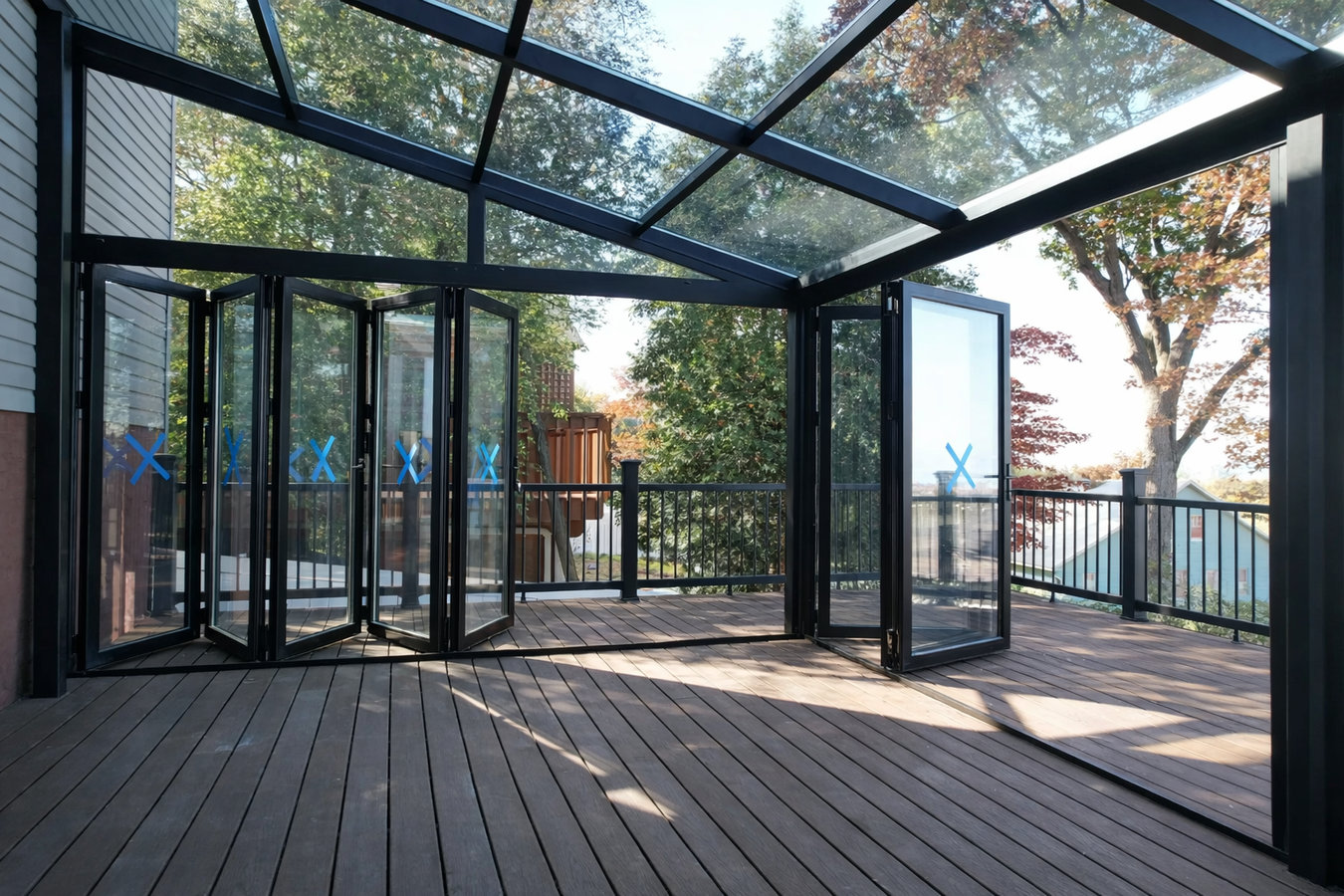
Redlands has more sun than almost anywhere in California, and a solarium puts that light to work year-round - for a sitting room, a plant space, or simply a bright area that feels connected to the outdoors even in winter. We design each solarium installation with Redlands summers in mind, specifying glass and ventilation that keeps the space usable through the hottest months.
Adding a sunroom to an older Redlands home takes more planning than a standard new-construction project. Wood-frame walls, aged foundations, and historic district review requirements all affect the design. We assess the existing structure during the estimate visit and build a plan that fits the home rather than forcing a standard solution onto it.
Redlands properties - especially those near downtown and the University of Redlands - often have covered porches, side yards, or rear patios that are close to livable but not quite there. Enclosing an existing covered patio adds walls and glass to turn that space into a true room without the footprint of a full addition.
Victorian and Craftsman homes in Redlands have architectural detail that a standard prefabricated sunroom simply does not complement. A custom-designed sunroom can match the roofline, trim style, and materials of the original home - which matters especially in neighborhoods where the city's historic preservation standards are active.
Redlands sits at roughly 1,300 feet elevation, which makes winters noticeably cooler than the lower Inland Empire cities. Overnight frost is possible from December through February. A fully insulated four season sunroom handles both the hot summers and the cold snaps - a room that stays comfortable and useful without a separate climate control system.
Many Redlands homes have large backyard lots with mature trees and older concrete slabs that are seldom used in summer because the direct sun makes them too hot. A solid-roof patio cover solves that problem quickly, shades the slab, and reduces the heat load on the back wall of the house at the same time.
Redlands is unusual among Inland Empire cities. It has one of the highest concentrations of Victorian and Craftsman homes in Southern California, with many properties dating back to the citrus-boom era of the 1880s through the 1920s. These homes have wood-frame construction, original plaster walls, and foundations built long before modern seismic and soil standards. Adding a sunroom or solarium to one of these properties is not the same job it is on a 1970s tract home on a standard concrete slab. The existing structure needs to be assessed carefully at the framing, the wall connection, and the foundation before any drawings are submitted. Clay soils under many Redlands lots shrink and swell with the seasons - the same expansive soil behavior common throughout the Inland Empire - which puts additional stress on older foundations over time.
Redlands summers are hot. Temperatures regularly hit 95 to 105 degrees from June through September, and the city sits at around 1,300 feet, which means the UV exposure is intense. A sunroom or solarium that is not designed for this level of heat becomes an unusable oven by mid-morning in July. Low-emissivity glass, thermally broken frames, and proper ventilation are not optional upgrades here - they are the baseline for a room that actually works. The City of Redlands historic preservation program also adds a layer of review that does not exist in most other Inland Empire cities - a contractor unfamiliar with this process can easily submit drawings that trigger a lengthy review or require redesign.
Our crew works throughout Redlands regularly, and we understand the local conditions that affect sunroom contractor work here. The older neighborhoods near the historic downtown and the University of Redlands - a private liberal arts institution in the city since 1907 - are where most of the Victorian and Craftsman homes are concentrated. These properties have character and architectural detail that is worth preserving in any addition, and our design process accounts for that. The newer subdivisions on the north and east sides of the city are more standard Inland Empire construction - stucco exteriors, tile roofs, and concrete slab foundations - and those projects follow a more predictable path.
Redlands is bisected by the I-10 and sits about 60 miles east of Los Angeles. From our Moreno Valley base, we reach most Redlands neighborhoods in 20 to 30 minutes. The Kimberly Crest House and Gardens - a Victorian landmark open for public tours - sits on a hillside in the city and is surrounded by some of the most distinctive residential blocks in the area. We are familiar with the character of those streets and have worked on comparable properties in the area.
We also serve the neighboring community of Loma Linda to the west, which shares the same general climate and soil profile as Redlands, and Colton just north of Loma Linda. Both are regular parts of our service area.
We reply within one business day. We cover what you want to build, where it would be located on your property, and a sense of your budget. If you have an older Redlands home, it helps to mention that upfront - it shapes how we approach the estimate visit.
We visit to measure the site, assess the existing wall framing and foundation, and identify any historic preservation considerations. The written estimate you receive covers all costs - materials, permits, and any structural work needed at the connection point.
We prepare and submit drawings to the City of Redlands Building and Safety Division. If your property is in a historic district, we coordinate that review as well. City plan check typically runs two to four weeks after a complete submission.
Construction begins once permits are issued and typically takes four to eight weeks depending on scope. A city inspector reviews the work at required stages. You receive the final inspection sign-off when the project is complete and the room is ready to use.
We work with Redlands homeowners on sunrooms, solariums, and patio enclosures - older homes, newer homes, and everything in between. Contact us for a free on-site estimate.
(951) 518-9916Redlands is a city of about 73,000 to 75,000 people in San Bernardino County, roughly 60 miles east of Los Angeles along the I-10. The city was founded in the 1880s and grew rapidly through the early 1900s as a center of the Southern California citrus industry. That growth left behind an unusually rich collection of Victorian mansions, Craftsman bungalows, and early 20th-century homes that define the character of the older neighborhoods near downtown Redlands and the University of Redlands. The city has a strong local identity - residents tend to stay, homeownership rates are relatively high, and the historic downtown with its brick buildings and tree-lined streets draws people from across the region.
About 60 percent of Redlands housing units are owner-occupied, and single-family detached homes make up the majority of the stock. The newer subdivisions on the north and east sides of the city - built from the 1970s through the 1990s - have stucco exteriors and tile roofs typical of Inland Empire construction. Properties closer to downtown feature larger lots with mature trees, old brick walkways, and the expansive hardscape that comes with a century of ownership. Neighboring communities of San Bernardino to the northwest and Loma Linda to the west are both within our regular service area and have similar climate and soil conditions.
From Victorian-era homes near the historic district to newer stucco houses on the east side, we build permitted sunrooms and patio enclosures across Redlands - contact us for a free estimate.